Cap Removal
Cap Removal
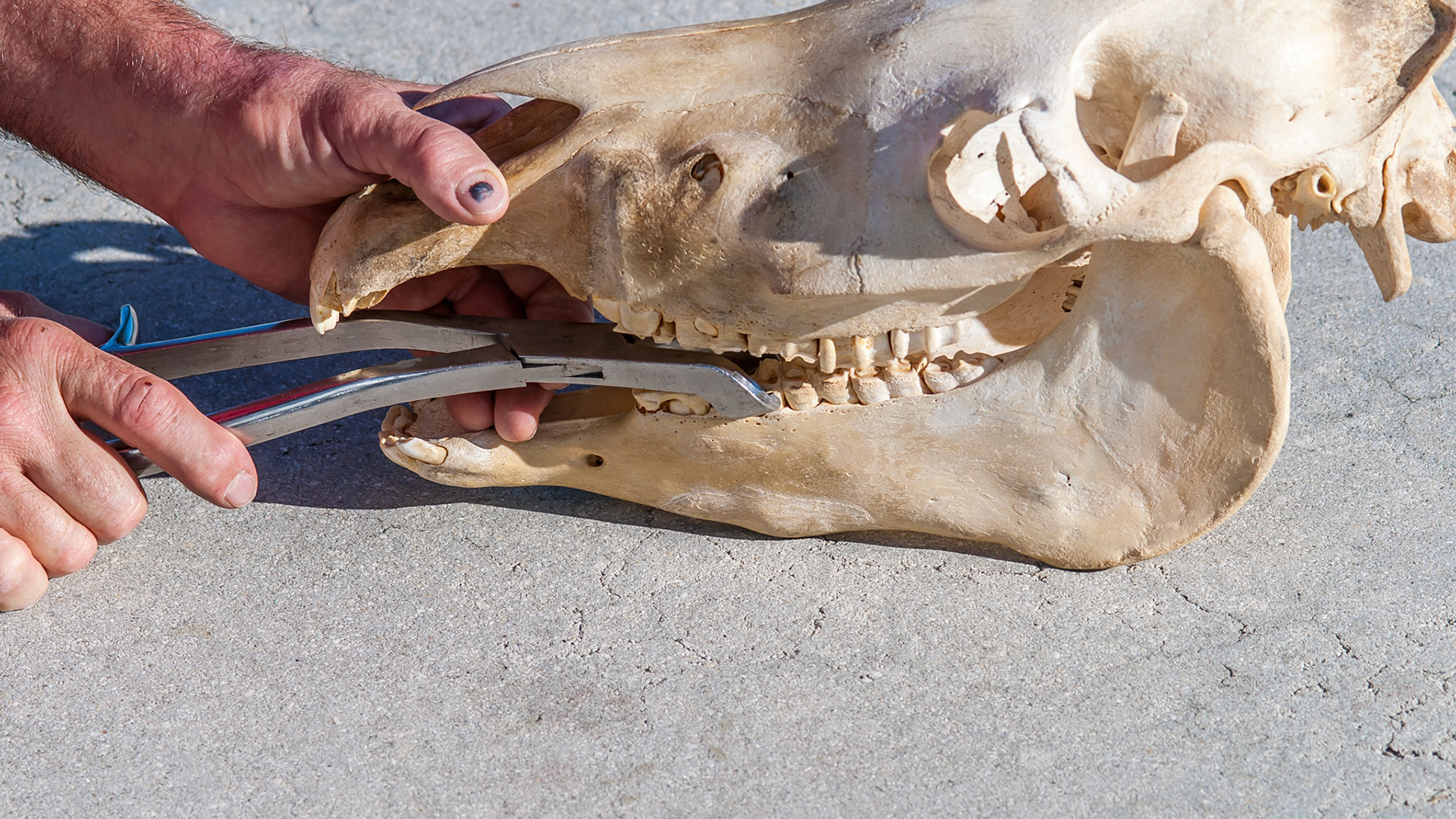
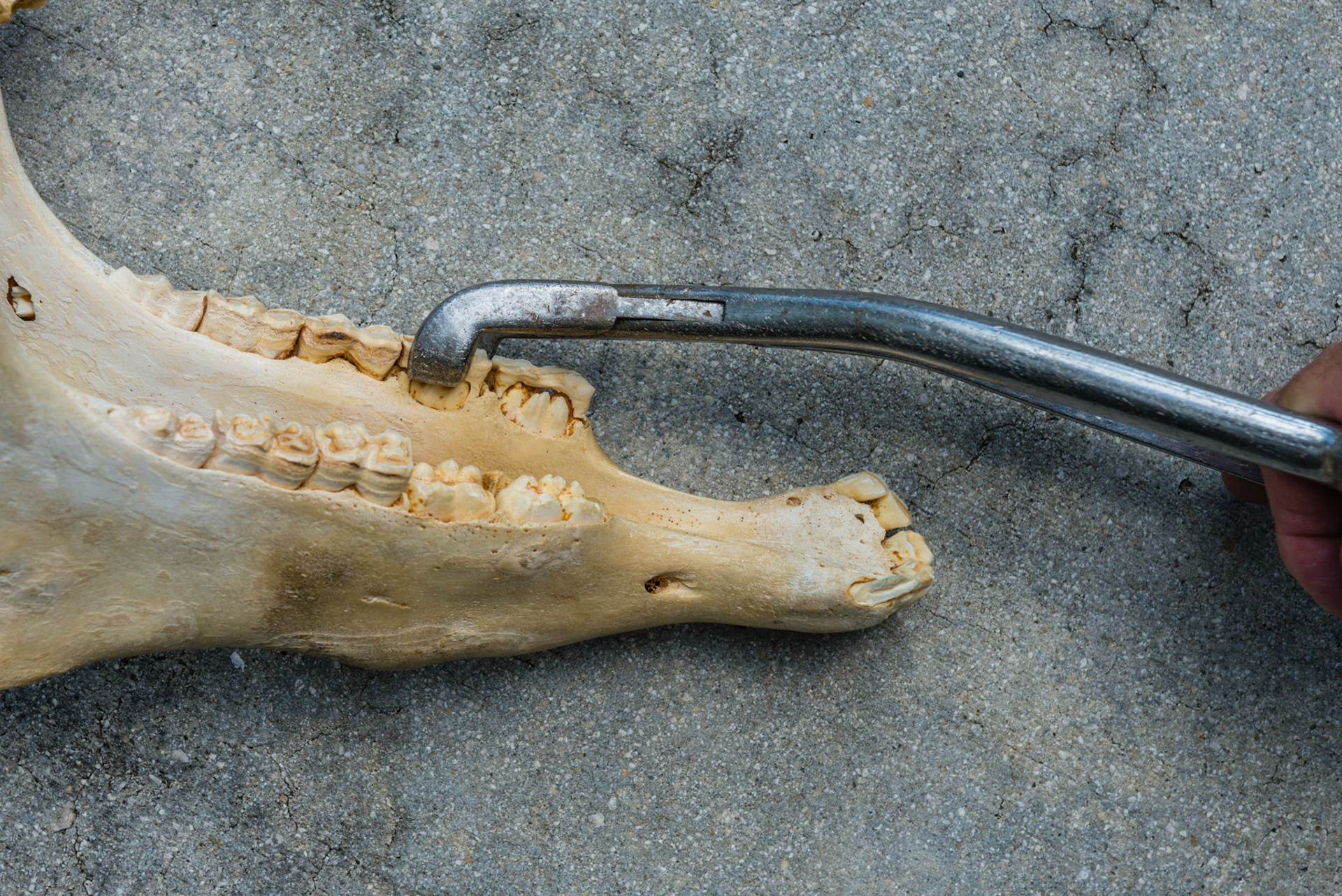
The lower Reynolds cap forceps on 76.
The lower Reynolds cap forceps on 77.
The lower Reynolds cap forceps on 78.
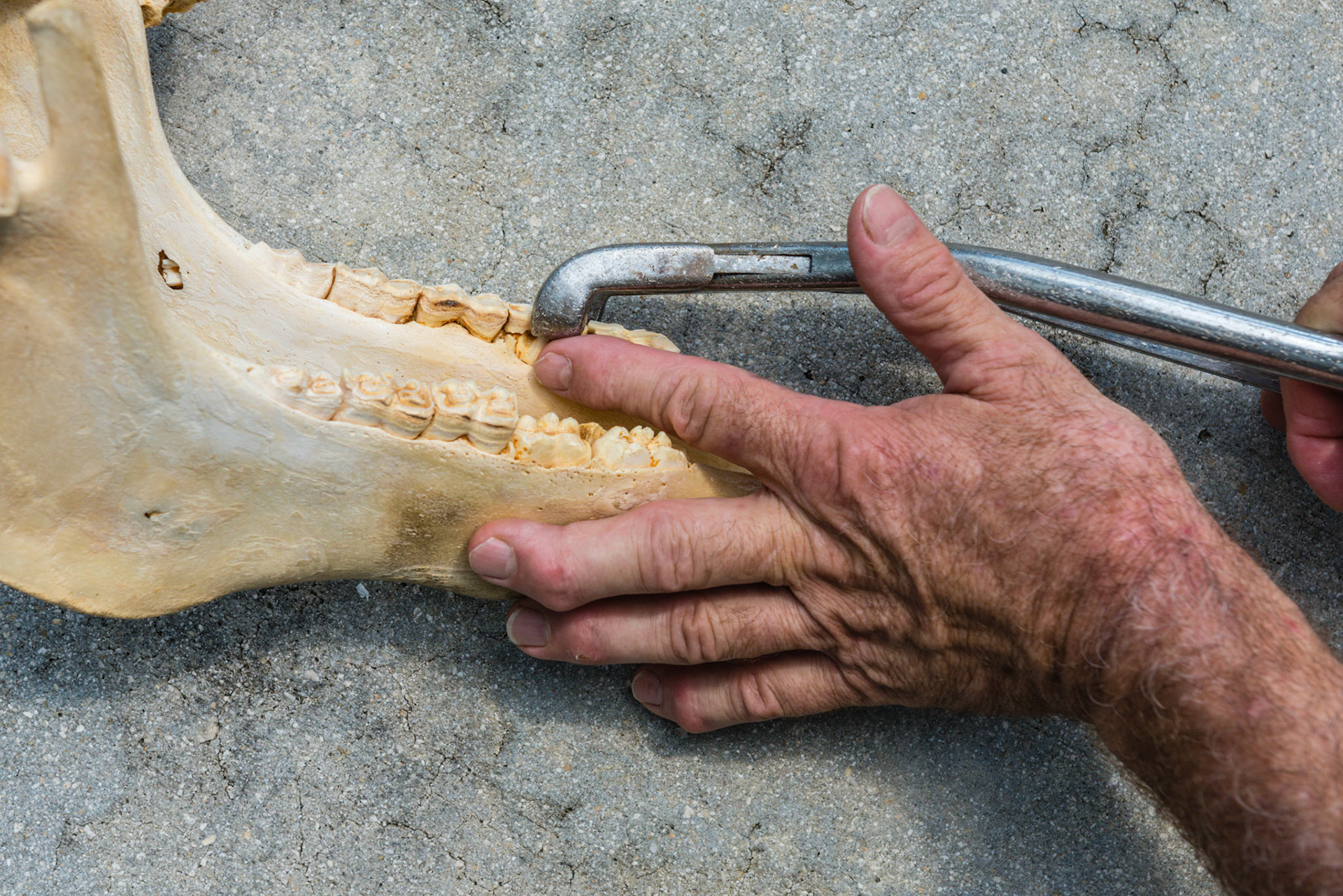
See how the thumb pushes the Reynolds cap forceps into the mouth allowing the hand to remain relaxed and the jaws of the forceps to remain open.
Using the hand in mouth technique, the forefinger can be used to guide the end of the cap forceps onto the correct tooth.
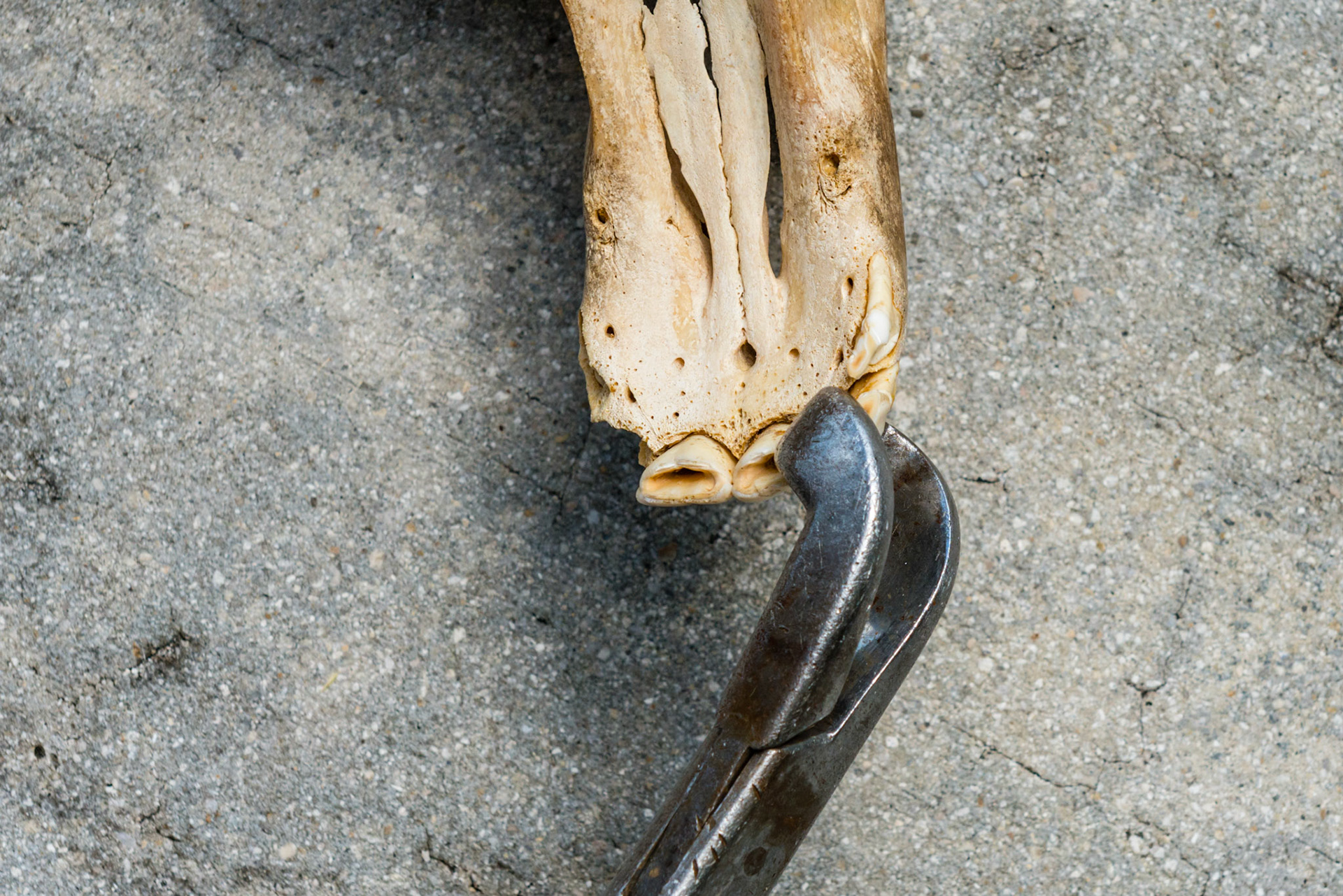
The cap forceps is caught on the lingual edge of 77 and will be rotated outwards to lift the cap off the permanent tooth.
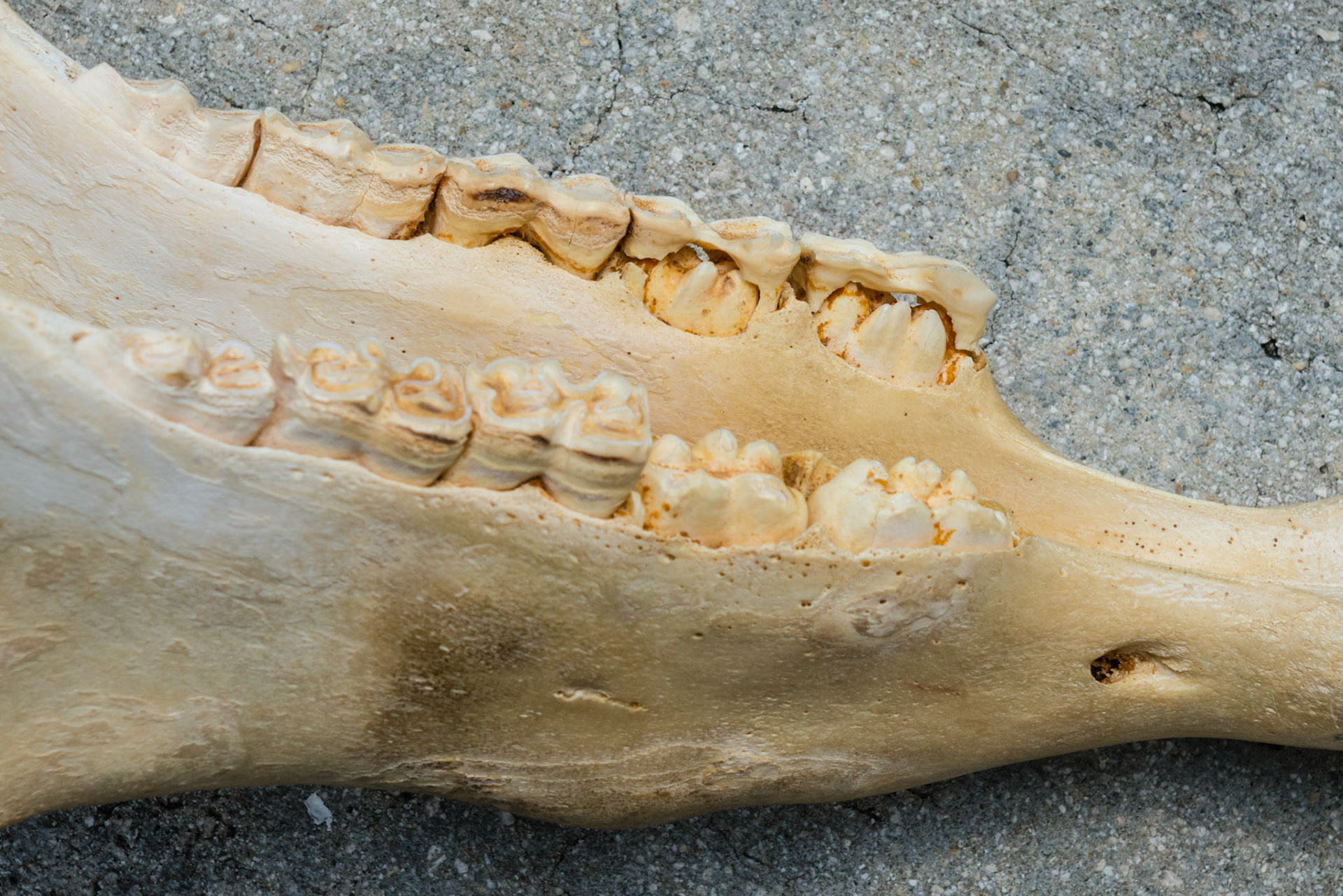
Different stages of cap maturity. Notice the degree of space between the lingual edge of caps 76 and 77 and the edge between the mandible and underlying permanent tooth. These two caps are mature and food mixed with saliva can get underneath the cap and create a fermented smell. Fingers placed in these areas will feel this space and will also pick up the odor. Compare this to no space under the 78 cap which is not mature and not ready for extraction in this 3 year old.
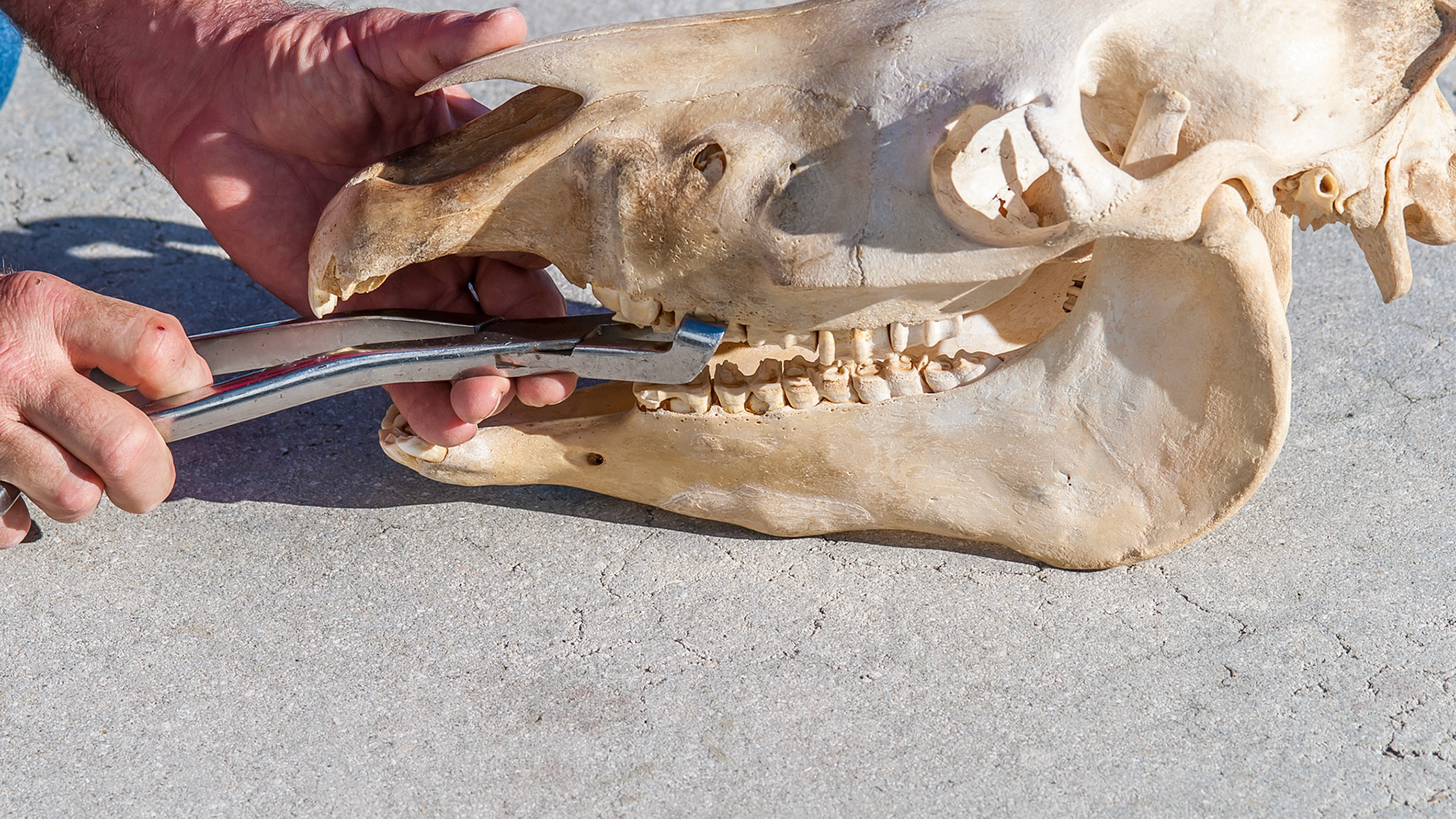
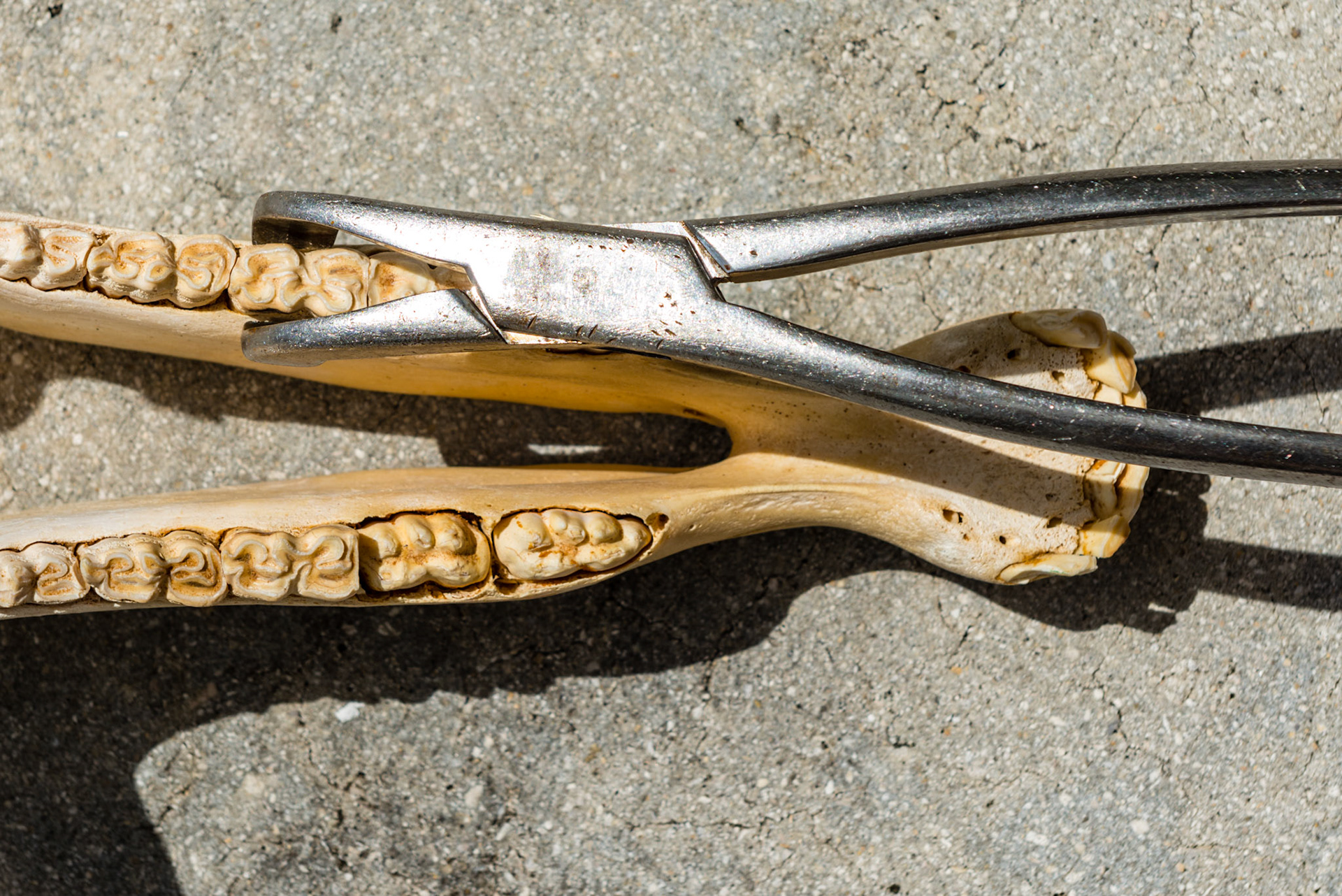
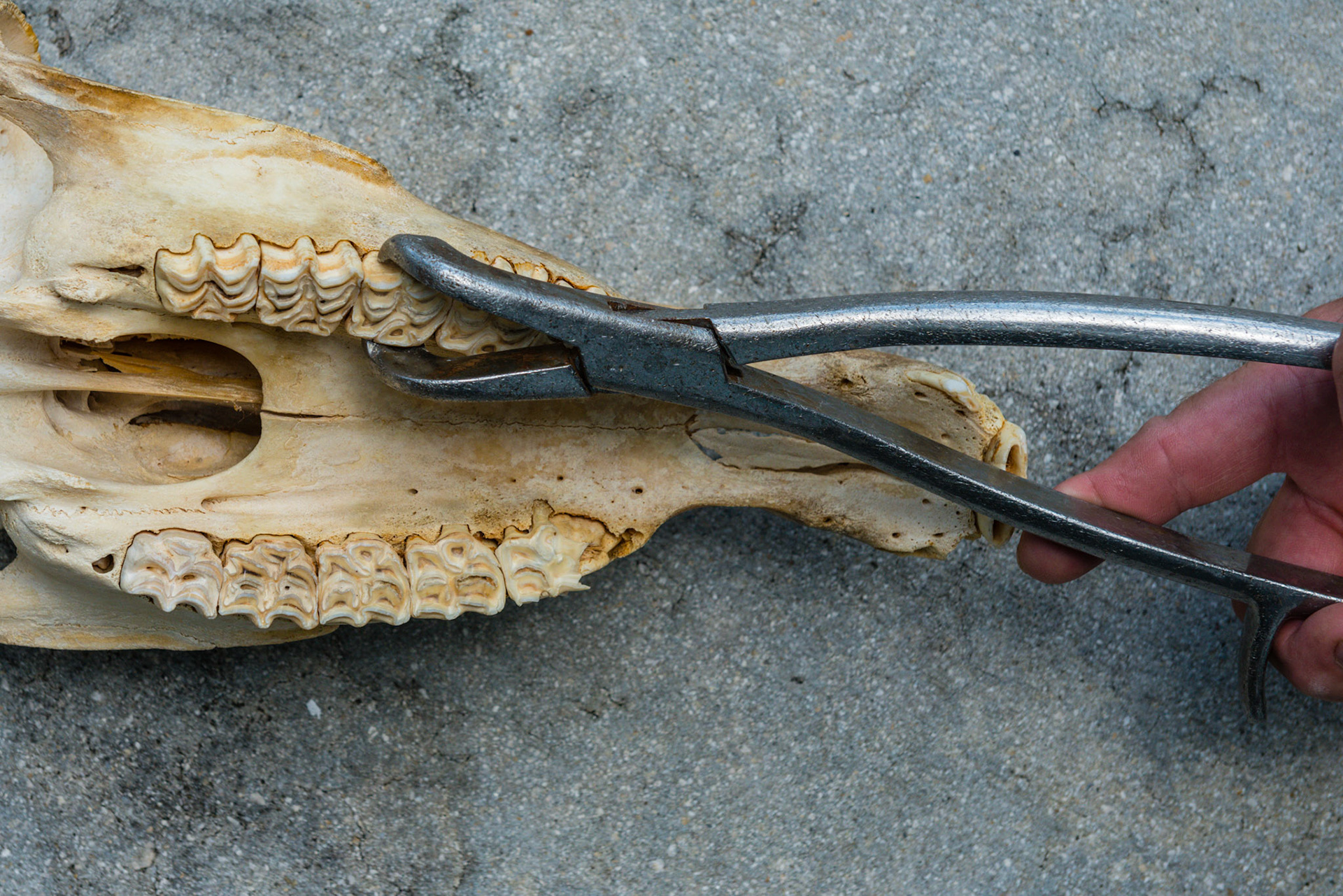
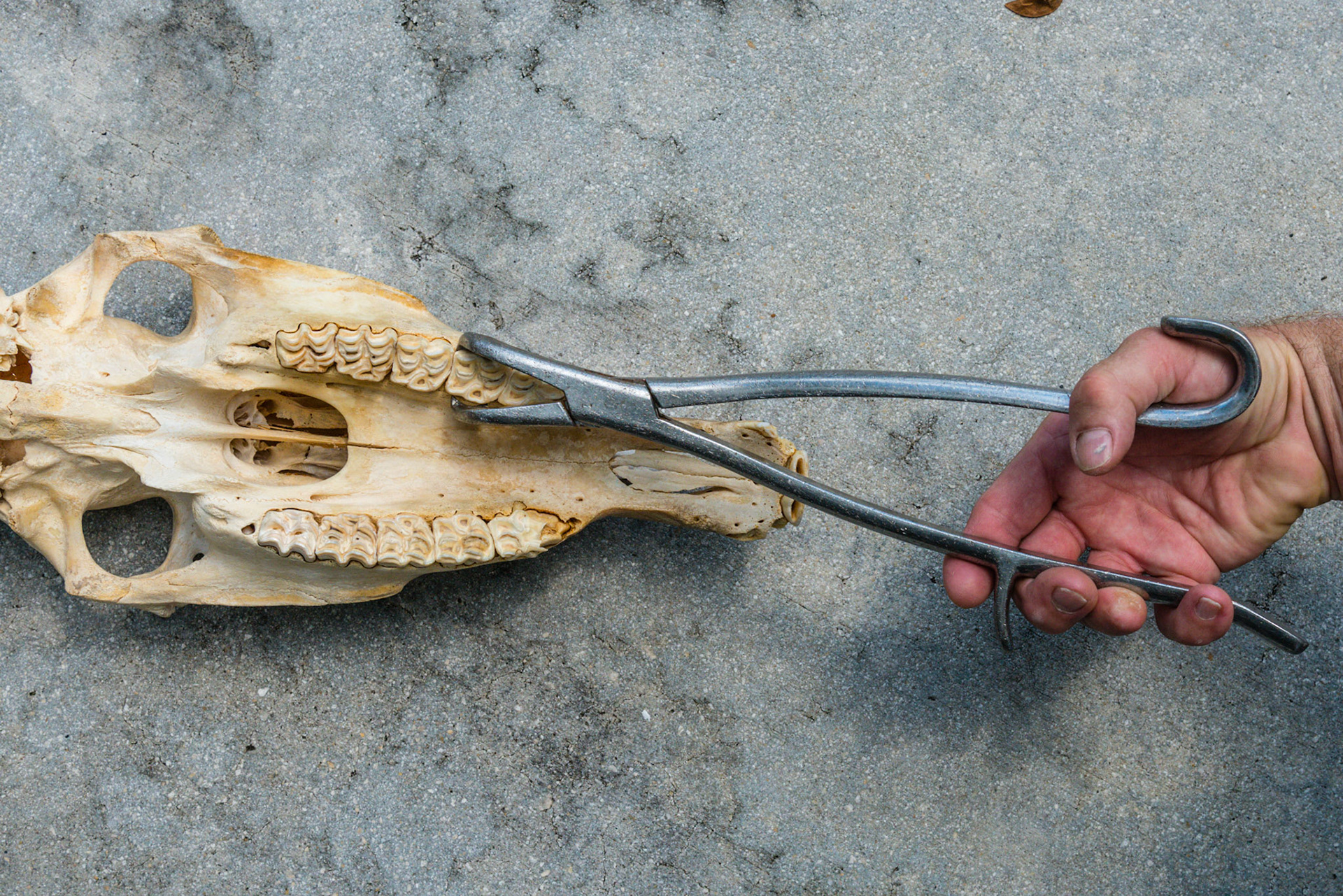
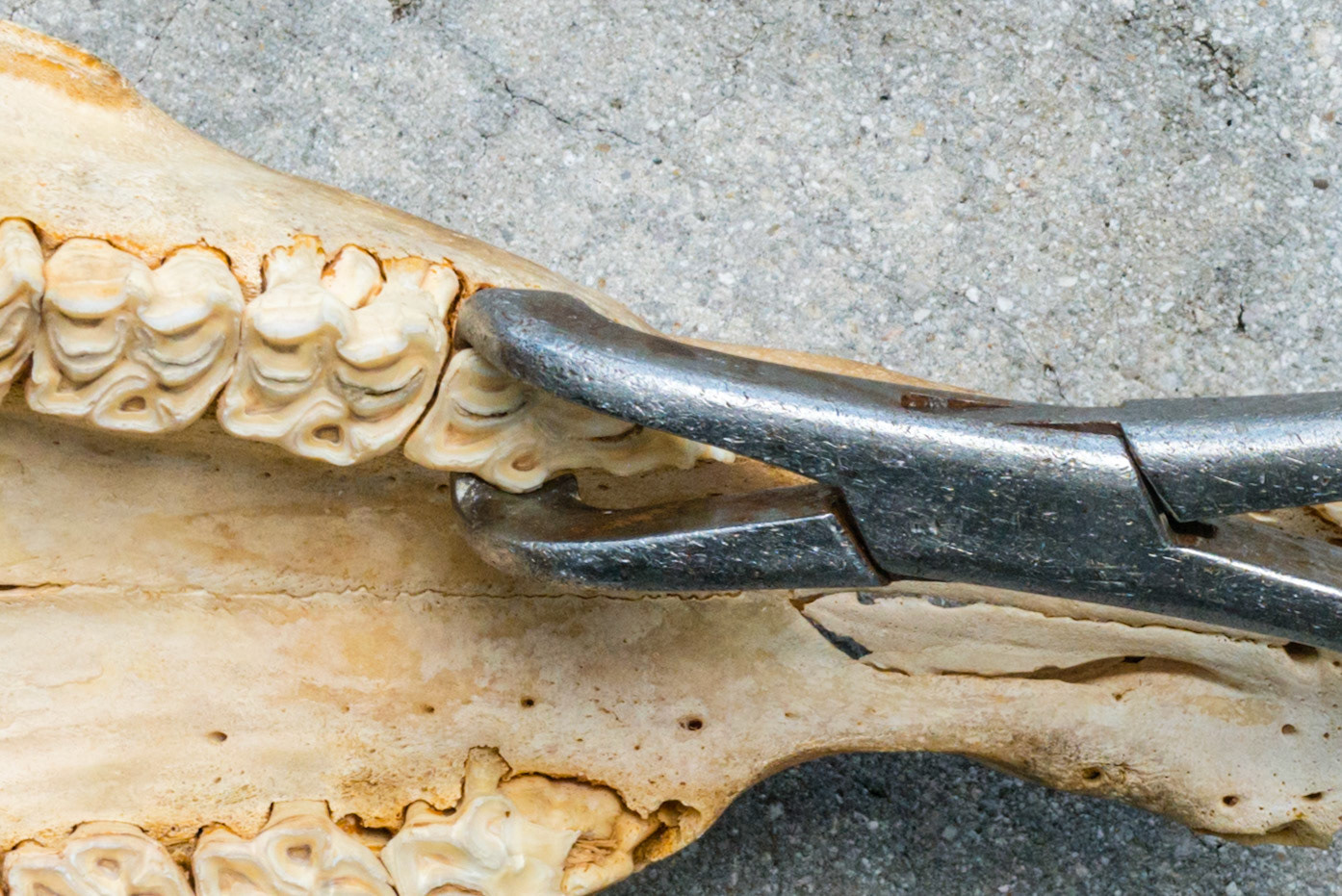
The upper Reynolds cap forceps applied to the 58 cap.
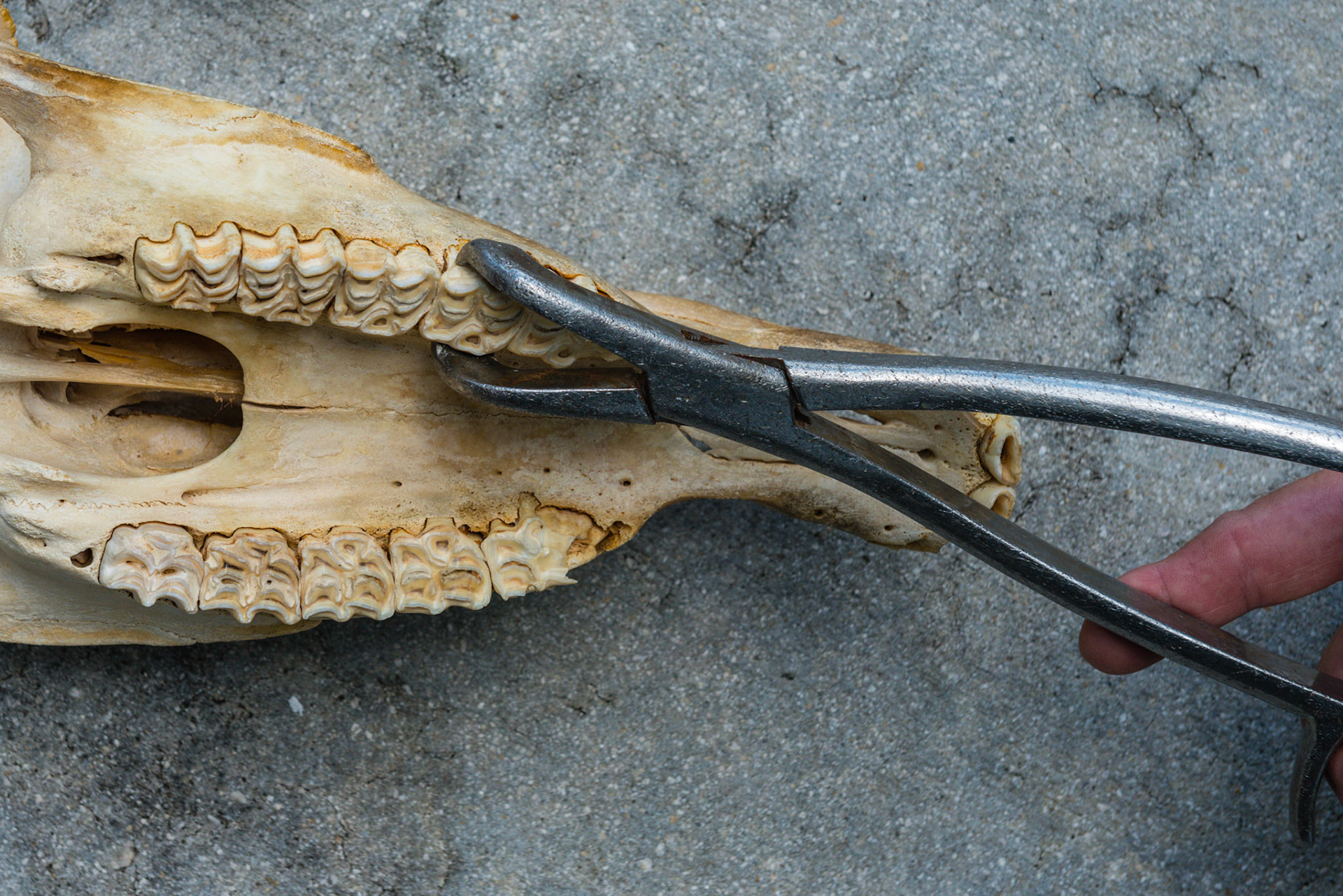
The upper Reynolds cap forceps applied to the 57 cap.
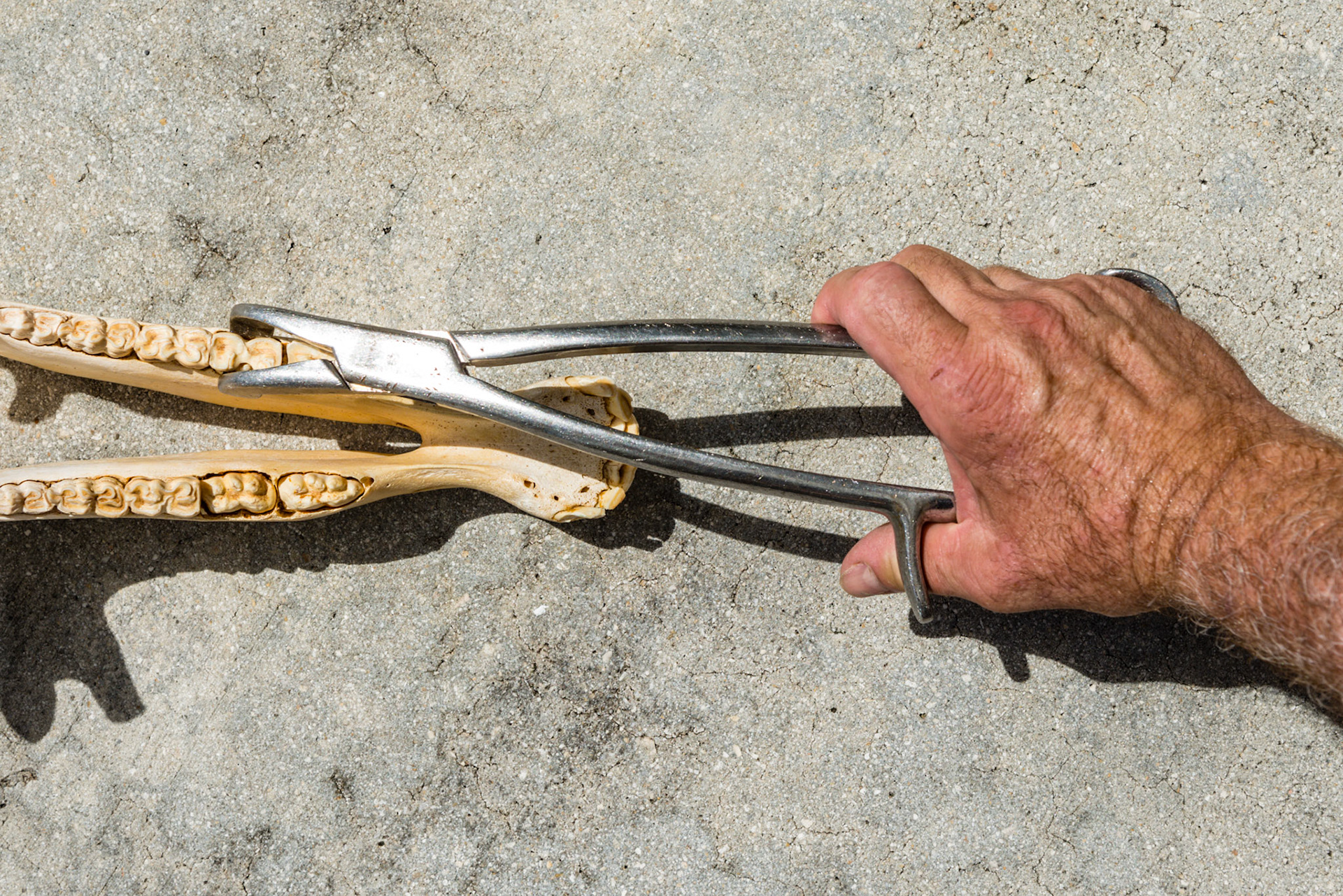
The upper Reynolds cap forceps applied to the 57 cap. Notice how the hand is applied to the forceps. The tab on the handle allows you to push and pull the forceps in the mouth without having to grip the handle and close the jaws. The hook end of the handle also hooks onto the thumb. These added features of the Reynolds forceps also help when rotating the forceps to rock the cap off.
The tips of the jaws of this upper forceps can be seen to grasp only the caudal part of the cap edges of 56. Grasping too far rostrally can fracture the cap requiring a second extraction for the remaining 56. Try to position the forceps tips on the caudal part of the #6 caps.
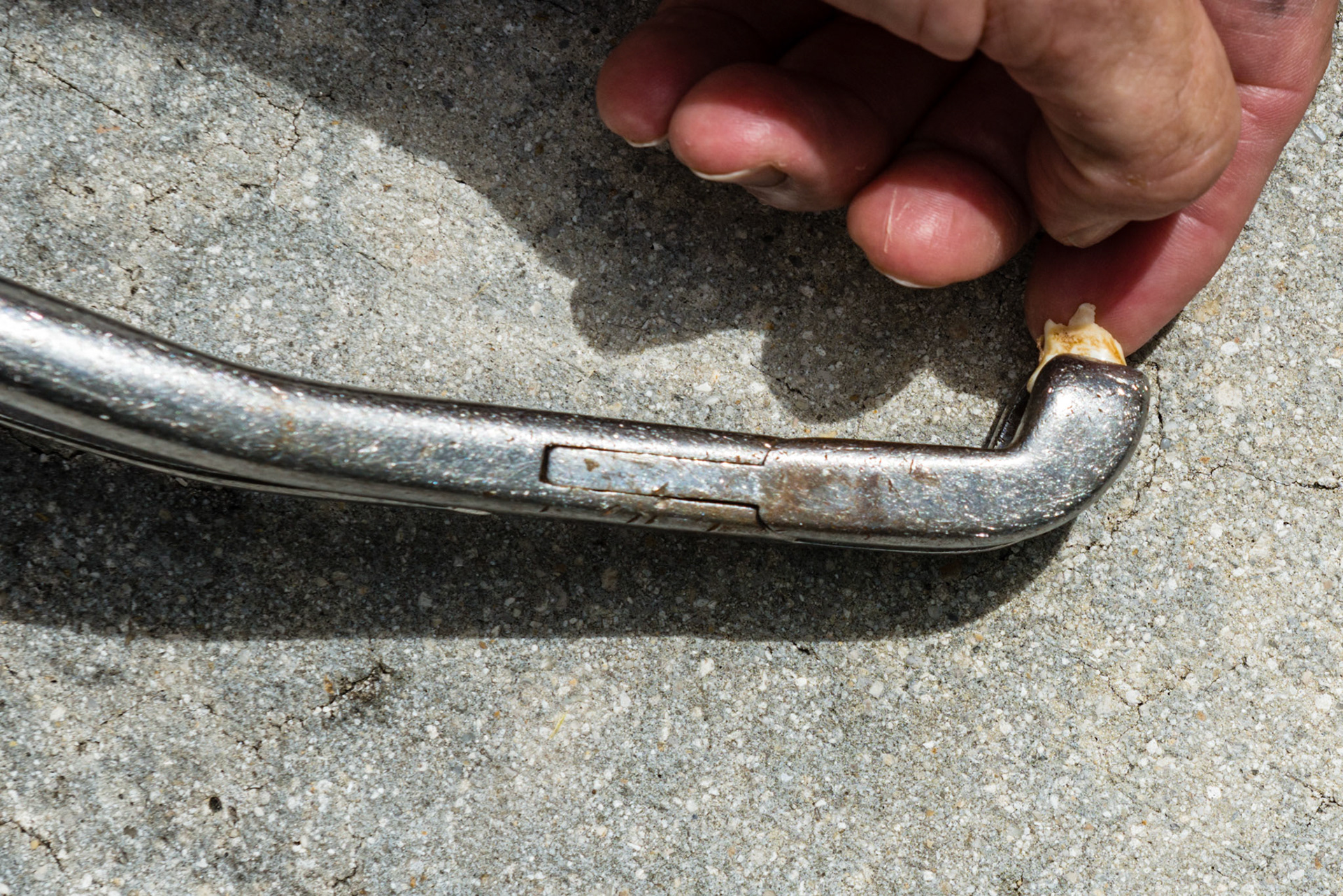
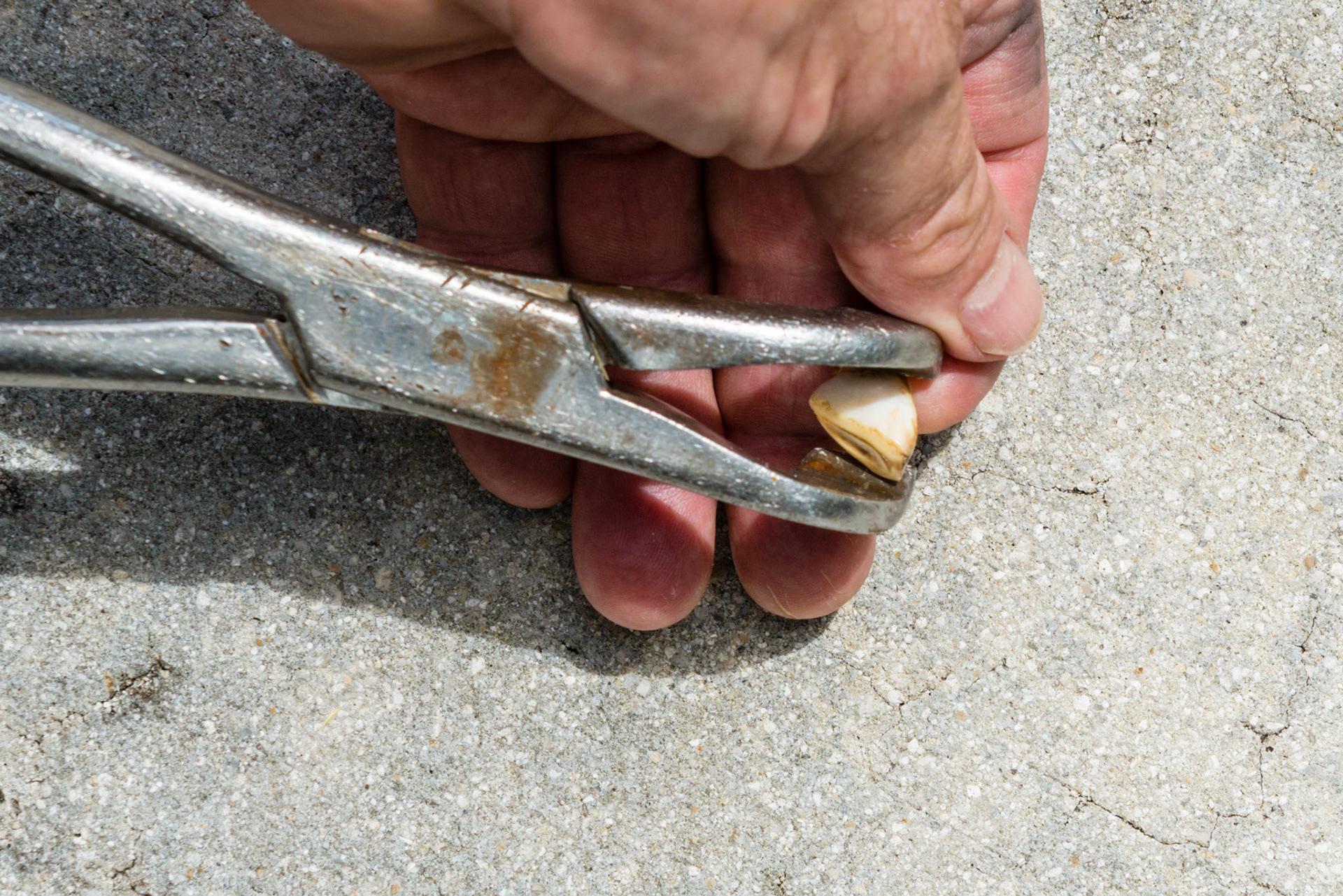
My finger represents the permanent incisor. The lower Reynolds cap forceps are placed on the incisor cap as seen here and the forceps are rotated outward rotating the cap away from the permanent underlying tooth.
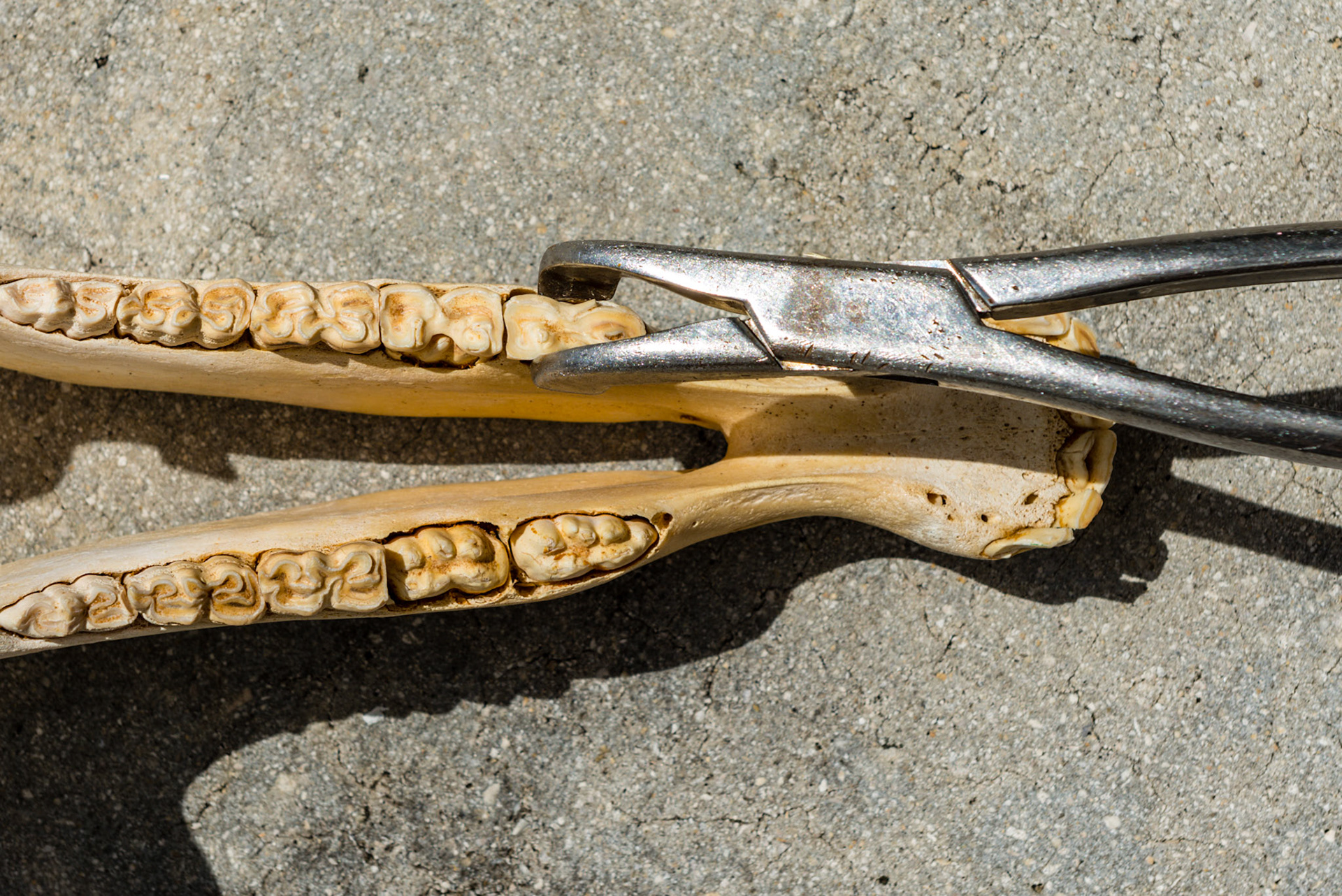
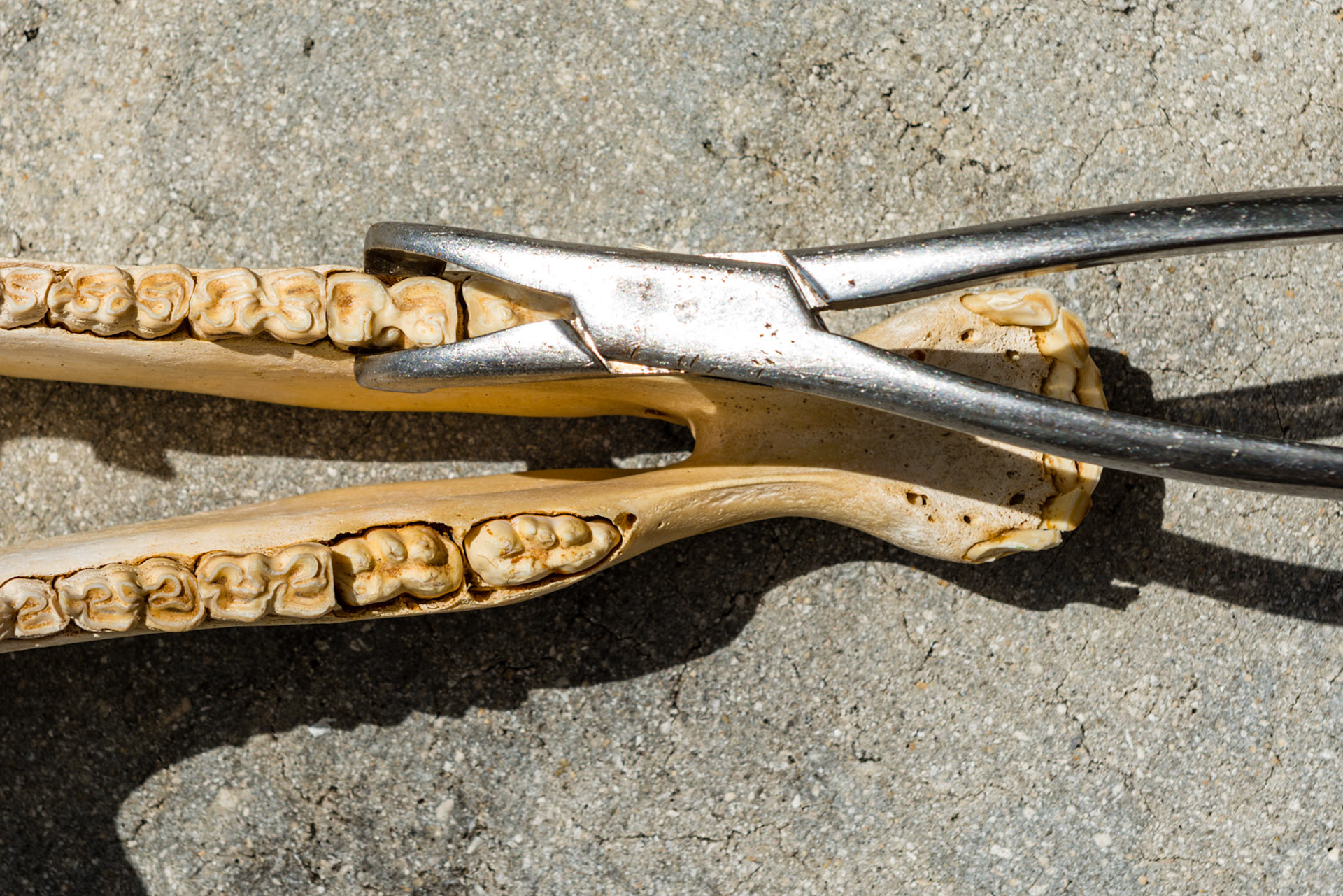
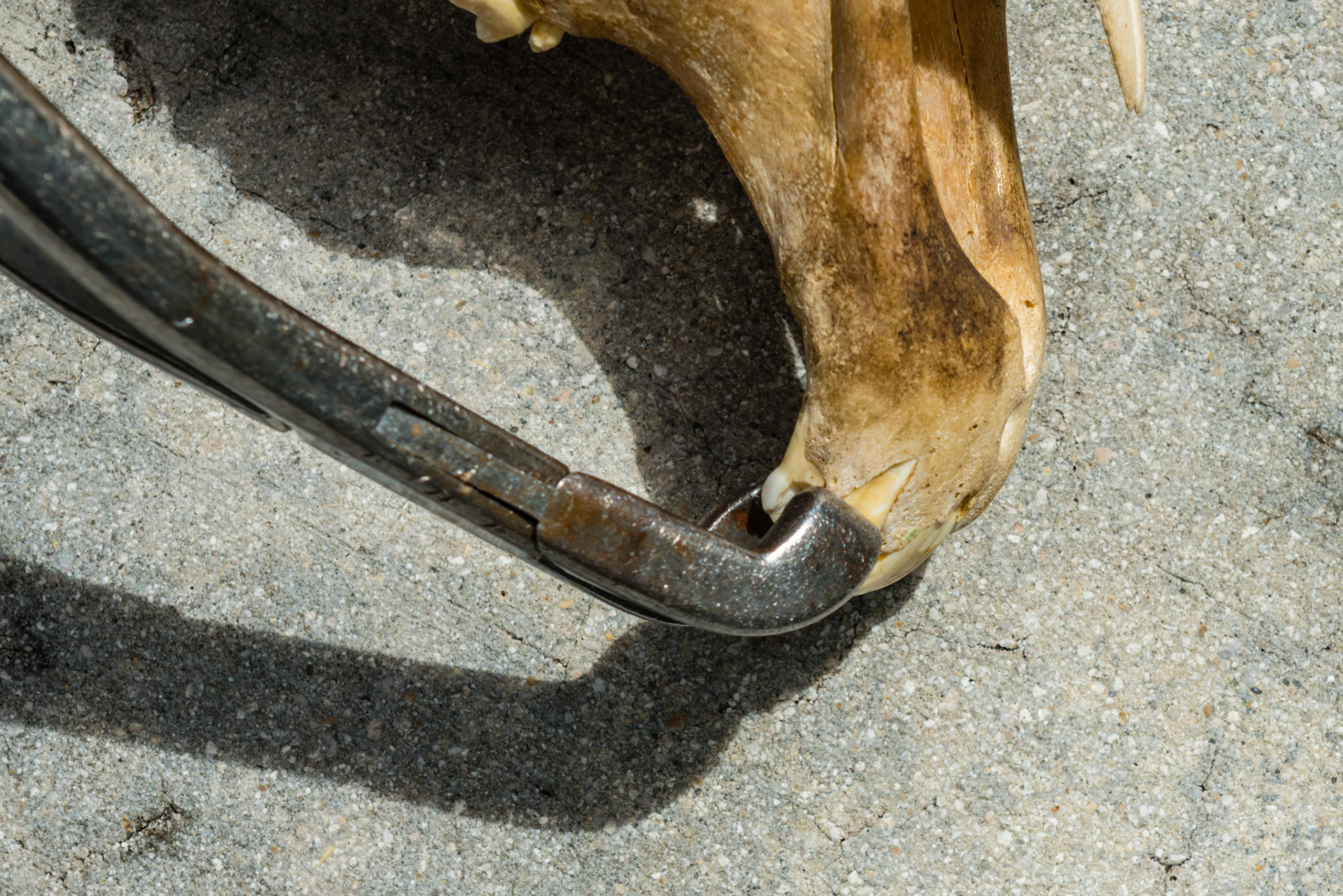
Another position for extracting an incisor cap. One tip of the forceps is placed on the distal lingual edge and the other tip is placed on the proximal labial edge. The forceps are rotated drawing the caudal lingual edge away from the horse and pivoting on the proximal labial edge. This works even on incisor caps that have already loosened their proximal ends from the gum line.
This shows the angle of approach of the cap forceps onto the 52 cap. The jaw needs to be opened for this and most horses, with some patience, allow this.
Here is a ventral view of the cap forceps with the one tip on the distal lingual surface and the other tip on the proximal labial surface. The forceps in this example would be rotated to the right driving the proximal labial tip into the horse and the distal lingual tip away from the horse.